
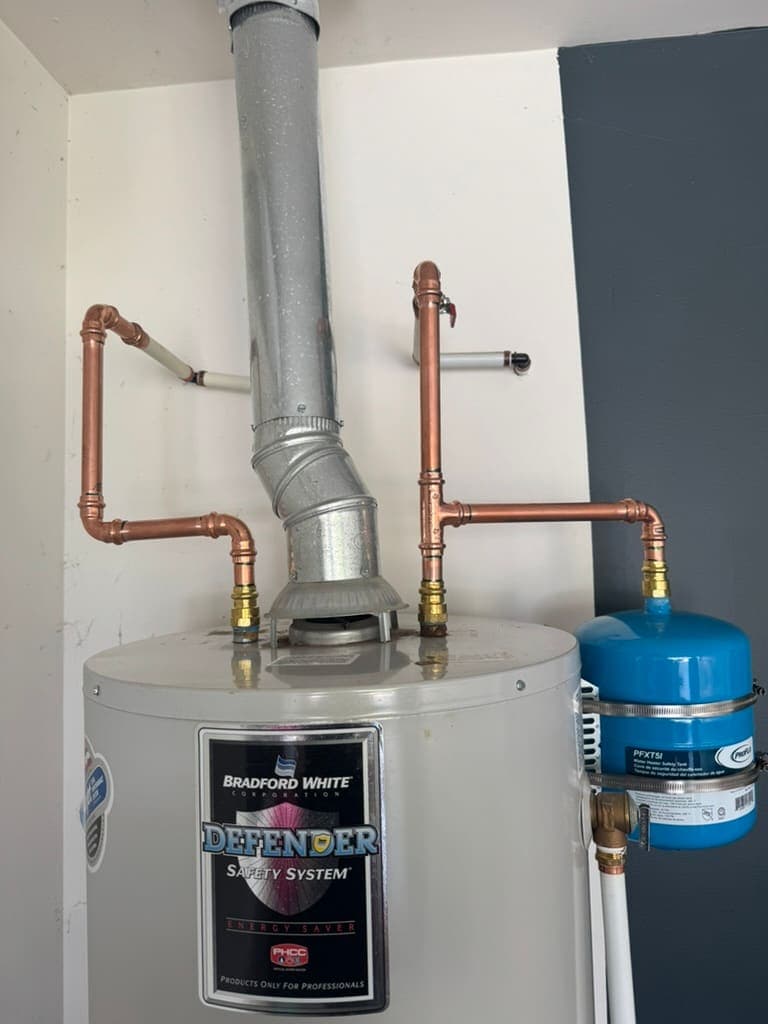
If you have no hot water or a leaking tank, let’s address it right away. First, check if your tank is sound. If it is, we can likely repair the heating elements or controls to get your hot water back. If the tank is leaking or nearing the end of its life, replacing it is usually the better option. A healthy tank can accept parts, while a compromised one means every repair is just a temporary fix.
A tank-style heater is simple: it stores hot water and has parts that heat and regulate it. Electric models have one or two elements and thermostats, while gas models use a burner system and controls. When a component fails, we can often replace just that part. But when the tank fails, we can’t just swap out a part. That’s the key difference between a repair that makes sense and one that just delays the inevitable.
What a leak is really saying
If you see water around your heater, act fast. First, figure out where the water is coming from. If it’s at a pipe joint, valve, or the temperature and pressure relief discharge line, you might just need to fix a fitting or control. If it looks like the tank is sweating after filling it with cold water, it could be condensation that dries up once the unit heats. But if you see steady water coming from the body of the tank, especially around the bottom seam, the tank itself may be compromised, and it’s time to consider replacement.
Watch for patterns over a day or two. Puddles that come and go after large hot water draws tell a different story than a growing wet spot under a tank that hasn’t run. Look for rust stains, mineral buildup on joints, or a damp pan that never dries. You don’t have to solve the issue yourself, but knowing the location, frequency, and whether it's tied to usage will help you make a better decision. Those observations help separate a fixable connection from a failing tank.
Short showers, lukewarm water, and the question behind them
Running out of hot water too soon doesn’t always mean your heater is dying. Sometimes, your household demand has outgrown the unit’s capacity. A small tank feeding back-to-back showers, laundry, and a dishwasher can simply be overwhelmed. In that case, you have three choices: live with rationed use, upgrade the tank’s capacity, or switch to a heater type that better matches your needs.
Short supply can also indicate parts that aren’t doing their job. On many electric tanks, a single failed element can leave you with lukewarm water or a very short window of heat. Sediment buildup can reduce effective storage and slow heat transfer, which shortens your shower. A mixing valve issue can alter the temperature even if the tank itself is hot. None of these are diagnoses, but they are issues that can often be fixed without replacing the tank if it’s otherwise in good shape.
When a repair is a good bet
A repair makes the most sense when the tank is dry, the exterior is intact, and the problem is linked to a specific part. Common examples include a bad electric element or thermostat, a failed gas control, or a worn valve. These are component-level issues that we can confirm and fix. If your heater has been reliable until now and shows no signs of corrosion or past leaks, fixing the failed component can extend its life without needing a full replacement.
It’s also a good sign if your current unit still meets your home’s needs. If it kept up until recently and nothing major has changed in your household, restoring it to that state can be the most practical move. Just be aware of the patterns. One isolated part failure is not unusual. But if you’re seeing repeated breakdowns, especially with visible rust or water stains, it might be time to stop pouring money into small fixes and start planning for a replacement.
When replacement saves you time and second trips
Replacement makes sense when you realize that not every heater has the same remaining life. If the tank leaks, if there’s visible rust or bulging, or if you’re on your second or third repair call in a short time, it’s usually best to step up to a new unit. A replacement is also a chance to solve capacity and performance problems that repairs can’t fix. If you often run out of hot water or the heater is in a spot that makes service difficult, a new unit that’s sized and placed for your needs can eliminate those headaches.
Switching types of units is a bigger decision but can be worth it if there’s a persistent mismatch between demand and what a storage tank can deliver. Ask about the work needed to convert and whether your home’s gas, venting, electrical supply, drainage, and placement can support the change without extensive rework. This isn’t about fancy features; it’s about getting a system that fits your home without turning a simple swap into a lengthy project.
Tank, tankless, or hybrid: how to think about the tradeoffs
A new tank-style heater keeps things familiar. It stores hot water, meets short bursts well, and generally installs in the same footprint with fewer changes. If you were happy with your long showers before problems began, a like-for-like replacement, possibly with a larger capacity, can be the least disruptive way to get back to normal.
A tankless unit heats water as it flows. When sized correctly, it can help eliminate the “we ran out” problem, especially for longer draws. It also shifts the focus to flow rate, gas or electrical capacity, venting, and maintenance to keep the heat exchanger working well. This isn’t a one-size-fits-all solution. It works best where hot water use is spread out or prolonged, and it requires careful attention to sizing and installation details.
A hybrid heat pump water heater uses ambient air to heat the tank. This option is efficient and provides gentler, steadier heating. The trade-offs include space, airflow, condensate handling, and the effects on the room where it’s located. It’s a strong choice when you have the right spot and want to lower energy costs, but it’s not suitable for every space.
What a good estimate should spell out
Before you authorize any work, make sure the estimate is clear:
- What is being repaired or replaced, and why that choice fits your situation.
- Capacity, type, and any changes needed to install it in your home.
- What will be reused versus new, how existing equipment will be disposed of, and how the area will be left.
- Manufacturer warranty terms and any labor warranty the installer provides, plus recommended maintenance.
The goal here isn’t just paperwork. It’s to make the decision easier to live with later. When you can see in writing what’s changing, what’s staying the same, and how success will be measured, you have a fair way to compare options and avoid surprises.
If you want to talk through options for your home and budget, call us at (828) 222-3903. We're a locally owned Asheville plumber with a crew that has over 10 years of industry experience. We provide upfront pricing and are here for you Monday to Saturday, from 7 AM to 7 PM. Check out our water heater services for more information.